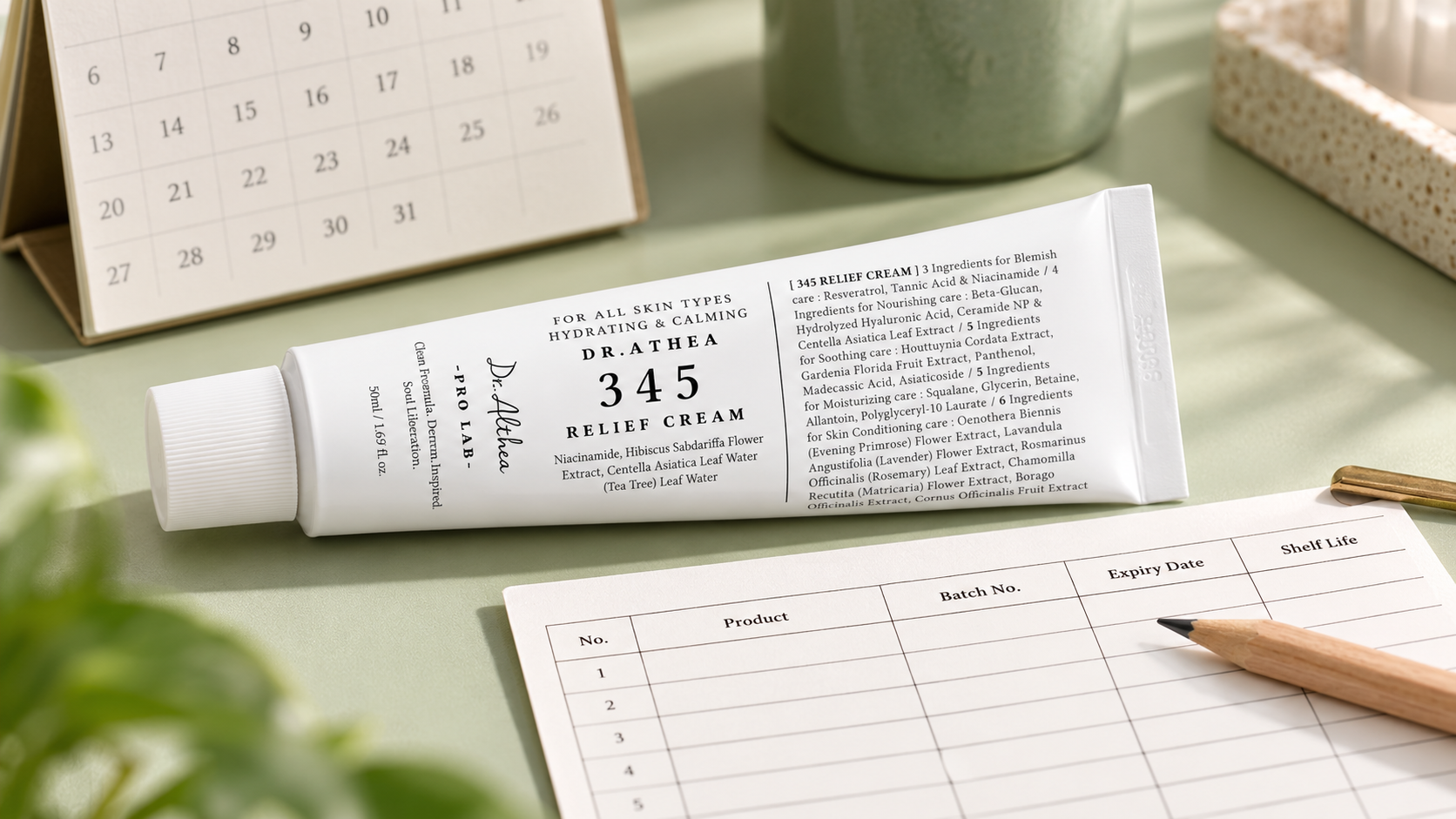
Before buying Korean skincare wholesale, confirm the date information for the stock being offered and agree an acceptable remaining selling window. Record batches when goods arrive and rotate dated stock deliberately. A catalogue image or a sample’s expiry does not confirm the expiry of your bulk order.
Receive the sheet by email, choose products, then request a confirmed quotation on WhatsApp. No payment is required to request the sheet.
Separate three different pieces of information
A batch or lot identifier helps distinguish production lots. Date markings may describe manufacture or expiry, depending on the product’s label. A period-after-opening symbol describes an instruction relating to an opened product. These are different fields and should not be substituted for one another.
Read the product’s actual labelling and ask the supplier or brand to explain ambiguous markings. Do not infer an expiry date from a number you cannot interpret, or assume that a generic online batch-code tool is authoritative for every brand.
Agree the remaining shelf life before payment
Write down the latest point by which you need the date information confirmed and the minimum remaining shelf life acceptable to your business. Base the requirement on the intended stock quantity, likely sales period and receiving timeline. Do not adopt a universal minimum merely because another retailer uses it.
For mixed lots, ask whether the dates vary within the same product line. If they do, record the quantities against each relevant expiry. Agree how an unexpected shorter-dated lot would be handled before the order is paid and dispatched.
Use your own selling window
Illustrative planning example: suppose you are considering 24 units of one product and your store has recently sold four units per month. At that observed rate, 24 units represent about six months of stock, before allowing for demand changes, transport or other uncertainty. That does not mean every unit will sell in six months.
Compare this stock coverage with the confirmed date information. If there is little room for slower sales, reduce the quantity or choose a different lot. For a new SKU with no history, mark the sales rate as untested and keep the purchase conservative rather than inventing a confident forecast.
Check the actual shipment on arrival
Follow the supplier’s unboxing-evidence requirements before opening.
Match product, pack and quantities to the quotation and invoice.
Check date and batch markings against the agreed stock information.
Record seal or packaging damage and keep affected goods separate.
Photograph relevant discrepancies and report them within the applicable window.
Update your stock record with received quantities and dates.
At Zosmetics, the published damage process requires reporting within 48 hours of delivery with a proper unboxing video. Check the current policy before ordering and make sure the receiving team knows the requirement. A damaged-goods claim is subject to review; recording evidence does not guarantee approval.
Rotate stock by date, with a condition check
Keep earlier-expiring saleable stock visible for picking before later-expiring lots. This approach is commonly described as first-expiry, first-out. Retain the product’s identity and batch information so staff do not mix different sizes or variants when rotating shelves.
Follow storage instructions on the product and keep stock away from conditions the label advises against. Rotation cannot repair poor storage or damaged goods. Do not continue selling stock just because it was received first if its condition or labelling raises an unresolved concern.
A stock record you can copy
Exact product, size and variant.
Supplier and purchase reference.
Received date and units.
Batch or lot marking as printed.
Date information and how it was confirmed.
Location and storage instructions.
Units sold, damaged, held or remaining.
Next stock-review date.
Keep customer-facing product information separate from private supplier documents. If you need help tracing a lot, having the purchase reference and label photographs together makes the discussion more specific.